
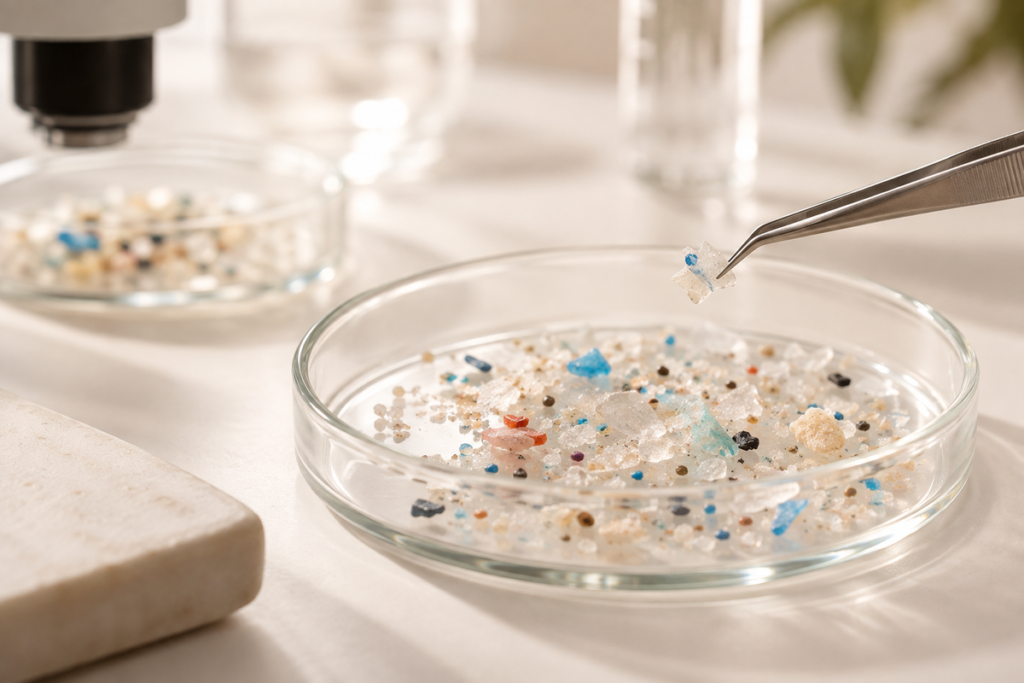
Microplastics are in our food, water and air. Now, researchers are also finding tiny plastic particles inside the human body — including in the placenta, breast milk and even the brain.
One recent finding is especially difficult to ignore.
A 2025 study published in Nature Medicine analyzed postmortem human brain, liver and kidney samples and detected micro- and nanoplastics in all three.
The brain samples contained substantially higher concentrations than the liver and kidneys.
Even more striking, the median concentration measured in brain samples from 2024 was approximately 47% higher than in samples from 2016.
So what could these particles mean for our health — and is there anything we can do to support the body as research continues?
Why Are Scientists Concerned?
Researchers are still working to understand the long-term health effects of microplastic exposure in humans.
But experimental research has linked microplastic exposure with biological processes including oxidative stress, inflammation, mitochondrial dysfunction and other forms of cellular stress.
These mechanisms matter because our cells — including brain cells — depend on carefully regulated systems to function normally.
It’s important to distinguish these findings from proven human health outcomes. Much of the evidence about these mechanisms comes from laboratory and animal studies, and the presence of microplastics in human tissue does not by itself prove that they are causing disease.
It’s Not Just the Brain
Researchers have also detected microplastics in the human placenta and breast milk.
These findings don’t prove that the particles are harming mothers or babies, but they do show how widespread human exposure has become — and why microplastics are receiving increasing scientific attention.
Completely avoiding exposure may be unrealistic. Plastic is deeply embedded in modern life, and tiny plastic particles have been detected throughout our environment.
So another question becomes interesting:
Can we support the body’s natural defenses against some of the cellular stresses scientists are investigating?

Where Nutrition Gets Interesting
There is currently no supplement proven to remove or “detox” microplastics from the human body.
But scientists have been studying natural compounds with antioxidant, inflammatory and cellular-support properties — including compounds that interact with some of the same biological pathways being investigated in microplastic research.
Saffron is one example.
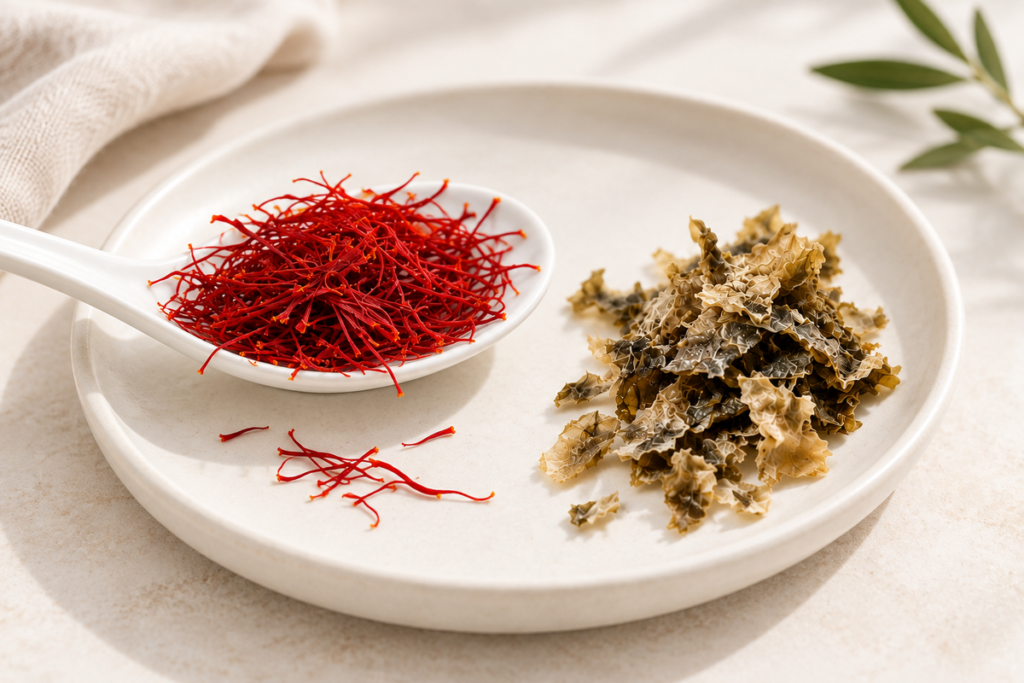
It contains naturally occurring compounds such as crocin and safranal, and research has explored saffron and its constituents for antioxidant activity, inflammatory pathways and cognitive health.
Brown seaweed contains other interesting bioactive compounds, including fucoxanthin and fucoidan, which have also been studied for antioxidant activity and their effects on inflammatory and cellular pathways.
This doesn’t mean these compounds have been proven to remove microplastics or prevent their effects in humans.
What it does mean is that they’re interesting candidates in the broader scientific conversation around cellular protection, oxidative stress and cognitive wellness.
What We Know — and What We Don’t
We know that micro- and nanoplastics have been detected in human tissues, including the brain, placenta and breast milk.
We also know that experimental research has connected microplastic exposure with processes such as oxidative stress and inflammation.
What we don’t yet know is exactly what lifelong exposure means for human health — or whether particular foods, nutrients or supplements can meaningfully protect people from those effects.
That’s why it’s worth following the research without turning emerging science into certainty.
A Formula That Made Us Take a Closer Look
While researching these compounds, one brain-focused formula caught our attention: Phytomem One.
The reason was its ingredient list.
Phytomem One brings together 10 ingredients in one daily formula, including saffron extract, fucoxanthin, fucoidan and oleuropein derived from olive leaf.
Several of these compounds are being independently studied for antioxidant, inflammatory, metabolic or cellular-support properties.
Phytomem One is designed to support memory, focus, mental clarity and overall cognitive wellness — and its unusual combination of ingredients made us curious enough to take a closer look.
So what are the other ingredients — and why were all 10 brought together in one brain-focused formula?
Discover Phytomem One’s Ingredients →
Sources & Research
- Nature Medicine — Bioaccumulation of microplastics in decedent human brains
- Nature Medicine — Health impacts of microplastic and nanoplastic exposure
- Microplastics and Oxidative Stress — Current Problems and Prospects
Affiliate disclosure: This article may contain affiliate links.
This post contains affiliate links. We may earn a commission at no extra cost to you.