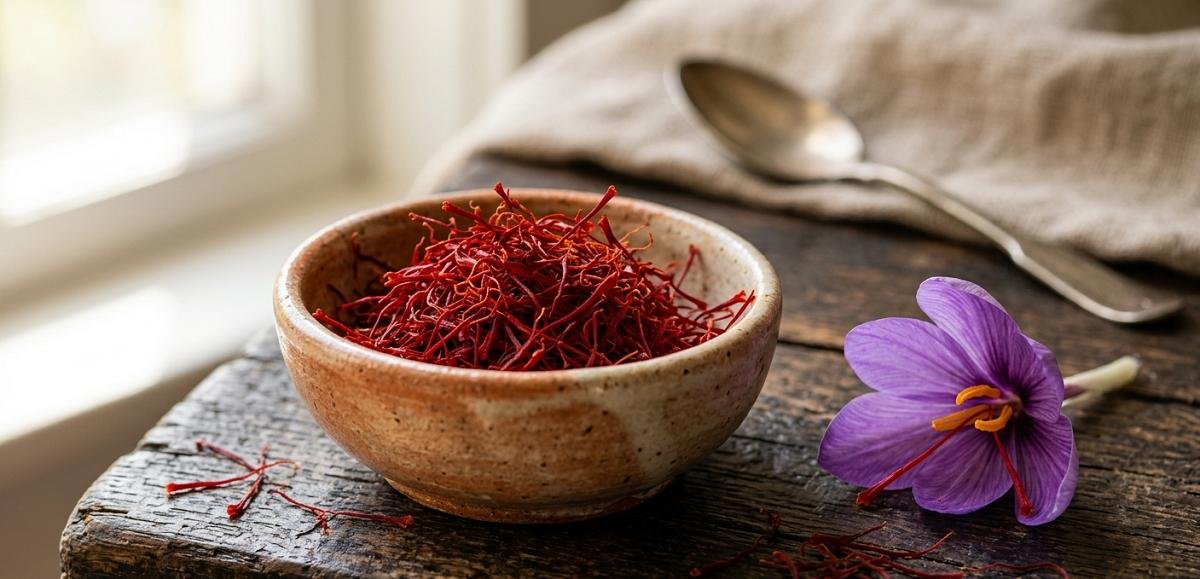
This golden spice has been valued for centuries. Now, promising research into mood, sleep and cognitive health is giving women another reason to pay attention — especially to saffron extract.
You probably know saffron as one of the world’s most prized spices.
But there’s another side to saffron that’s getting much more attention.
Today, saffron is appearing in wellness supplements designed around everything from mood and sleep to cognitive health and everyday well-being.
And if you’ve looked at one of those supplements, you may have noticed something: they often don’t simply contain saffron. They contain saffron extract.
So what’s the difference? Is saffron extract better than the spice in your kitchen? And what should you know before adding it to your wellness routine?
Here’s the short answer: saffron and saffron extract come from the same plant, Crocus sativus, but they’re not necessarily interchangeable — and understanding why makes the research around saffron much more interesting.
Saffron vs. Saffron Extract: What’s the Difference?
Traditional saffron consists of the dried stigmas of the Crocus sativus flower. It’s the intensely colored, aromatic spice that’s been valued in cooking for centuries.
Saffron naturally contains several compounds that have attracted scientific attention, including crocin, crocetin and safranal.
Saffron extract starts with the same plant, but concentrates compounds naturally found in saffron into a much smaller amount.
Some extracts are also standardized, meaning they’re produced to provide more consistent amounts of certain compounds or chemical markers.
That’s important because many clinical studies investigate specific saffron preparations or extracts at controlled amounts — not simply saffron added to food.
So, is saffron extract better?
Not necessarily.
If you want saffron for its flavor and culinary experience, the spice itself makes perfect sense.
But if your interest comes from research you’ve read about saffron, an extract can offer something different: a more controlled way of delivering particular compounds found in the plant.
And “more concentrated” doesn’t automatically mean “better.” The preparation, amount and quality of the extract still matter.
Before You Add Saffron to Your Routine, Here’s What to Know
As saffron has become more popular in the wellness world, more saffron supplements have appeared — but they’re not necessarily all the same.
Before choosing one, look beyond the word “saffron” on the front of the bottle.
Is it saffron or saffron extract?
A culinary powder and a concentrated extract aren’t necessarily equivalent.
How much does it provide?
The label should make it reasonably clear what you’re actually getting.
Is the extract standardized?
Standardization can help provide greater consistency between servings and batches.
What kind of research is behind it?
Different studies use different saffron preparations, amounts and populations, so it’s worth understanding what was actually studied.
You don’t need to become a scientist before choosing a supplement. It simply means “contains saffron” isn’t the only thing worth noticing.
The Surprising Side of Saffron
What makes saffron particularly fascinating is that researchers are looking far beyond its culinary uses. Some of the most promising areas include mood, sleep and cognitive health.
1. Mood & Emotional Well-Being
Mood is one of the most interesting areas of saffron research.
A 2026 systematic review and meta-analysis brought together 34 randomized controlled trials involving 1,769 adults and found improvements in some measures of depressive and anxiety symptoms, although results varied depending on the measurement used.
These findings help explain why saffron is attracting so much attention in conversations around mood and emotional well-being.
2. Sleep
Research into saffron and sleep has also produced promising results.
A meta-analysis found improvements in several measures of sleep quality following saffron supplementation. More recently, a 2025 randomized placebo-controlled trial involving adults with moderate insomnia found improvements in insomnia symptoms and sleep quality after four weeks with a standardized saffron extract.
More research is still needed, but sleep has become one of the more interesting emerging areas of saffron research.
3. Memory & Cognitive Health
This may be the most fascinating side of saffron.
Researchers have explored saffron and its compounds in relation to memory and cognitive function, with human studies and systematic reviews reporting promising findings.
Much of the clinical research so far has focused on people experiencing cognitive decline, so we don’t yet know whether the same effects apply to healthy adults.
But these early findings have helped make saffron increasingly interesting in the world of brain health, healthy aging and cognitive wellness.
4. Antioxidant Support
Saffron’s naturally occurring compounds, including crocin and crocetin, have also demonstrated antioxidant activity — another reason this ancient spice continues to attract scientific interest.
Together, these different areas of research help explain why saffron is now appearing in modern wellness formulas.
Which raises an interesting question:
What if saffron were just the beginning?
A Different Approach to Cognitive Wellness
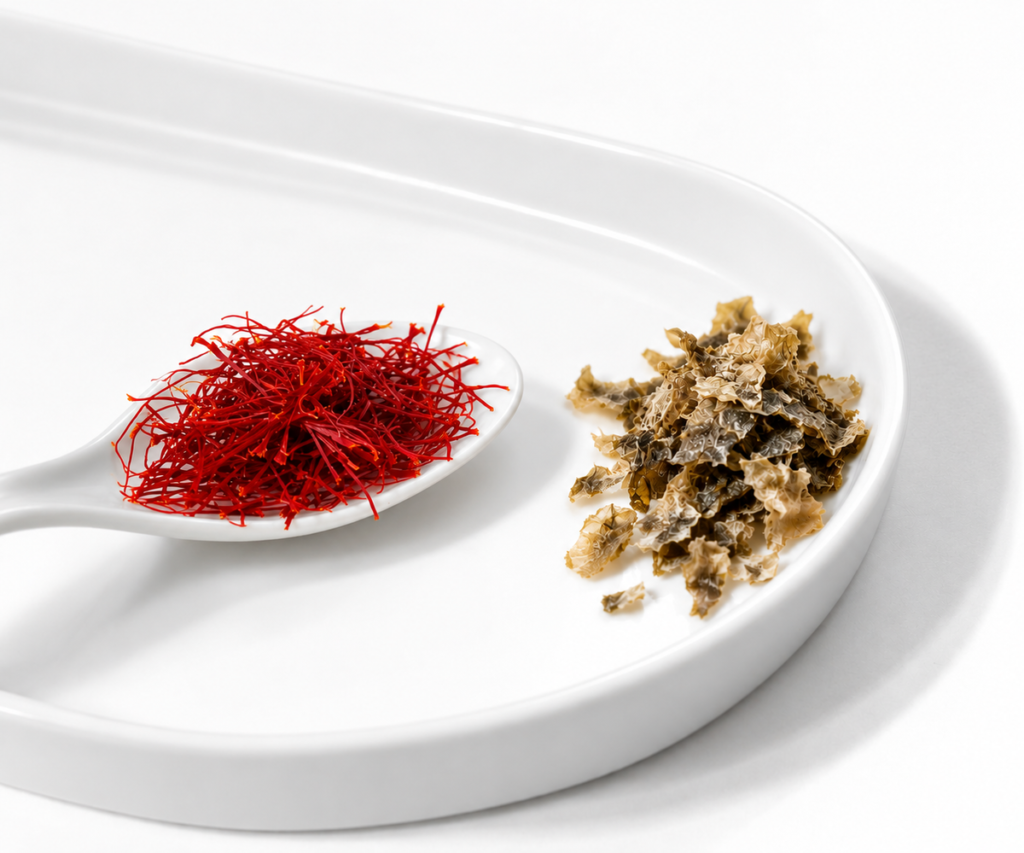
While looking more closely at saffron extracts and the formulas they’re appearing in, we came across a cognitive wellness supplement called Phytomem One.
What caught our attention wasn’t simply that it contains saffron.
Phytomem One combines saffron extract with several other plant- and marine-derived compounds in a once-daily formula developed around cognitive wellness.
Alongside saffron, the formula includes ingredients such as fucoxanthin, fucoidan, oleuropein, berberine HCl and Ceylon cinnamon, among others.
Rather than taking several ingredients separately, the idea is to bring different compounds together into one simple daily routine.
TAKE A CLOSER LOOK AT THE PHYTOMEM ONE FORMULA →
You’ll be taken to the official Phytomem One website.
Your Brain Still Needs the Basics
No supplement replaces the foundations of cognitive wellness. Restorative sleep, regular movement, nutritious food, social connection and keeping your mind engaged all play important roles in long-term health.
A supplement can become part of that routine — but it should complement healthy habits rather than replace them.
Why Phytomem One Caught Our Attention

If you came here wondering why saffron is suddenly appearing in wellness supplements, you now know there’s much more behind this spice than its culinary reputation.
Promising research into mood, sleep and cognitive health has made saffron an especially interesting ingredient to follow.
Phytomem One takes that idea a step further by combining saffron extract with a broader blend of plant- and marine-derived compounds in a simple once-daily cognitive wellness formula.
More ingredients don’t automatically make a supplement better. What makes this approach interesting is the possibility of bringing complementary compounds together for women who want to make memory, focus, mental clarity and long-term cognitive wellness a more intentional part of their everyday routine.
One capsule. Once a day.
If that sounds like the kind of support you’re looking for, you can explore the complete ingredient list and learn more about the approach behind Phytomem One below.
DISCOVER THE COMPLETE PHYTOMEM ONE FORMULA →
You’ll be taken to the official Phytomem One website.
HerWellChapter shares educational wellness content and does not provide medical advice. This article may contain affiliate links, which means we may earn a commission if you make a purchase through our links, at no additional cost to you.
This post contains affiliate links. We may earn a commission at no extra cost to you.